Sustainability is one of the most sensitive areas in aerosol manufacturing — not because innovation is lacking, but because claims are heavily scrutinised. In the UK, environmental language is regulated as strictly as safety claims, and misuse can result in enforcement action, product withdrawal, or reputational damage.
This article explains
how sustainability claims are assessed in practice, what evidence is required to support them, and where brands most commonly cross the line into greenwashing.
Why Sustainability Claims Are High-Risk in Aerosols
Aerosols sit at the intersection of:
- Pressurised packaging
- Chemical substances
- Waste and recycling systems
As a result, regulators treat environmental claims cautiously. A product may incorporate recyclable materials or lower-impact technology, but claims must reflect reality across the full lifecycle, not isolated features.
UK enforcement bodies assess whether claims are:
- Accurate
- Substantiated
- Clear to consumers
- Proportionate to actual benefit
Overstated or vague claims are considered misleading, even if made in good faith.
Common Sustainability Claims Explained
The most frequently used claims in aerosol marketing include:
- Recyclable
- Eco-friendly
- Sustainable
- Low carbon
- Environmentally responsible
Each carries a different evidential burden. For example, “recyclable” must consider real-world UK recycling infrastructure, not theoretical recyclability. “Eco-friendly” is particularly risky because it implies overall environmental benefit, which is difficult to prove comprehensively.
Evidence Requirements: What Regulators Expect
To support sustainability claims, brands must hold documented evidence showing:
- What aspect of the product is being claimed
- Why it is environmentally beneficial
- Compared to what baseline
Evidence may include lifecycle assessments, material specifications, supplier declarations, or independent analysis. Claims must be reviewed regularly, as infrastructure, regulations, and scientific understanding change over time.
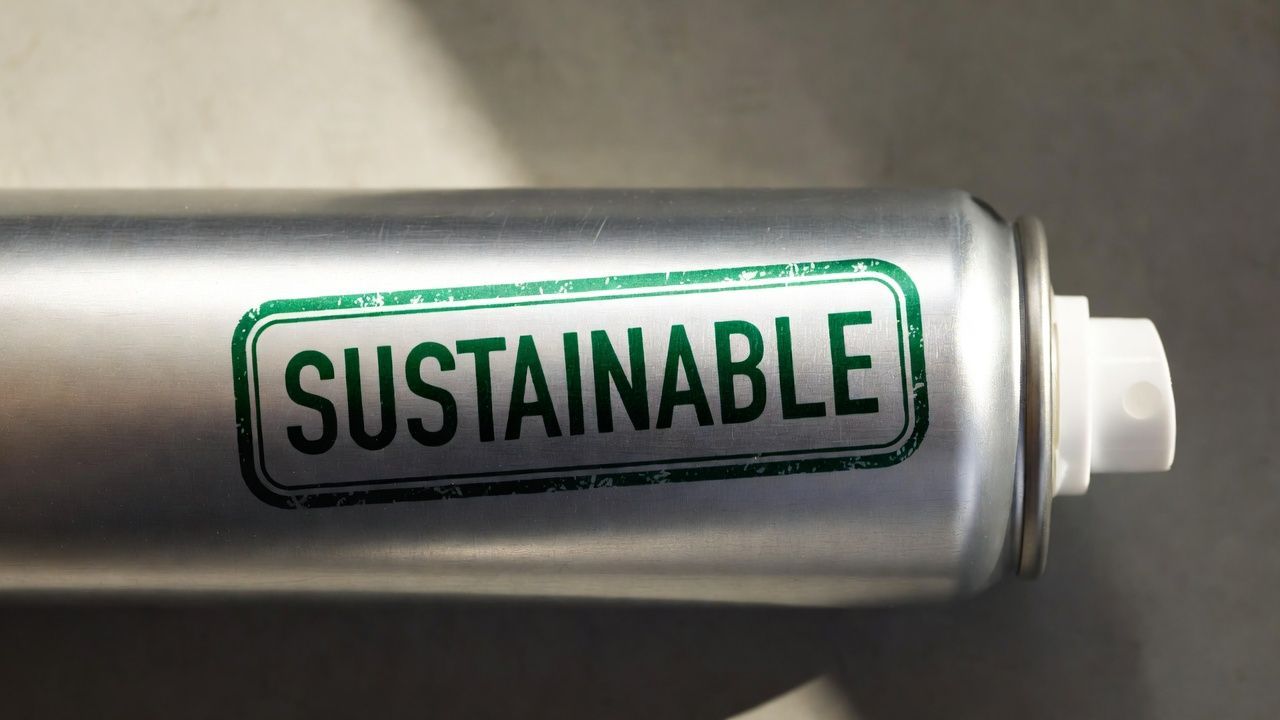
Aerosol Formats and Sustainability: Claims vs Reality
Different formats offer different environmental trade-offs. However, no format is universally “green”.
- Traditional aerosols may use recyclable materials but involve propellants
- Bag-on-Valve systems improve product separation but add components
- Eco-optimised formats reduce certain impacts while introducing others
Claims must reflect these nuances rather than implying absolute benefit.
Consequences of Incorrect Sustainability Claims
Misleading environmental claims can trigger:
- Enforcement by regulators
- Mandatory claim removal
- Product relabelling or recall
- Reputational damage
Increasingly, claims are also challenged by competitors and consumers, making accuracy essential.
Frequently Asked Questions
Can aerosol products be described as “eco-friendly” in the UK?
In most cases, describing an aerosol product as “eco-friendly” is high risk under UK consumer protection law.
The term implies an overall environmental benefit, which requires evidence across the product’s full lifecycle — including raw materials, manufacturing, transport, use, and disposal. For aerosols, this is difficult to demonstrate conclusively because environmental impact is distributed across multiple stages.
UK regulators expect claims to be specific and limited, rather than broad or absolute. Saying a component is recyclable or that a process reduces emissions is generally safer than making an unqualified “eco-friendly” claim.
If the claim cannot be clearly defined, substantiated, and understood in context by the average consumer, it is likely to be considered misleading. Brands are therefore advised to avoid generalised environmental language unless supported by robust, product-wide evidence.
What does “recyclable” legally mean for aerosol products?
In the UK, a product can only be described as “recyclable” if it can be recycled in practice, not just in theory.
For aerosol products, this means considering whether the container, valve, and internal components are accepted by UK recycling systems at scale. Aluminium cans are widely recyclable, but additional components may not be processed uniformly across local authorities.
Regulators assess whether a reasonable consumer would be able to recycle the product through normal household waste streams. If specialist handling or disassembly is required, the claim must be clearly qualified.
Unqualified “100% recyclable” claims are particularly risky unless supported by clear, current evidence that all components are recycled widely and consistently in the UK.
Are Bag-on-Valve aerosols more sustainable than traditional aerosols?
Bag-on-Valve systems can offer environmental advantages in certain contexts, but they are not inherently more sustainable in all cases.
They may reduce the need for chemical propellants and support preservative-free formulations, which can be beneficial. However, they also introduce additional materials, such as internal bags and valves, which must be considered in recycling and lifecycle assessments.
Regulators expect claims to reflect these trade-offs. Saying that a Bag-on-Valve product is “better for the environment” without qualification is unlikely to be acceptable. Claims should focus on specific, demonstrable benefits rather than overall superiority.
Sustainability comparisons must be evidence-based and narrowly framed.
What counts as greenwashing in aerosol marketing?
Greenwashing occurs when environmental claims exaggerate benefits, omit relevant information, or create a misleading impression of sustainability.
Examples include:
Using vague terms like “green” or “planet-friendly” without explanation
Highlighting one positive feature while ignoring larger impacts
Making claims based on future intentions rather than current reality
In aerosol marketing, greenwashing is often unintentional — driven by enthusiasm rather than evidence. However, intent does not reduce regulatory risk.
UK authorities assess how claims are likely to be interpreted by consumers, not how they were meant.
Who is legally responsible for sustainability claims on aerosol products?
The legal responsibility for sustainability claims rests with the brand owner that places the product on the market.
Manufacturers may provide technical information, but the decision to make environmental claims — and the wording of those claims — is the brand owner’s responsibility. If a claim is challenged, regulators will expect the brand owner to produce evidence supporting it.
This makes internal review processes critical. Claims should be assessed in the same way as safety or compliance statements, with documentation retained and reviewed regularly.